Who it's for
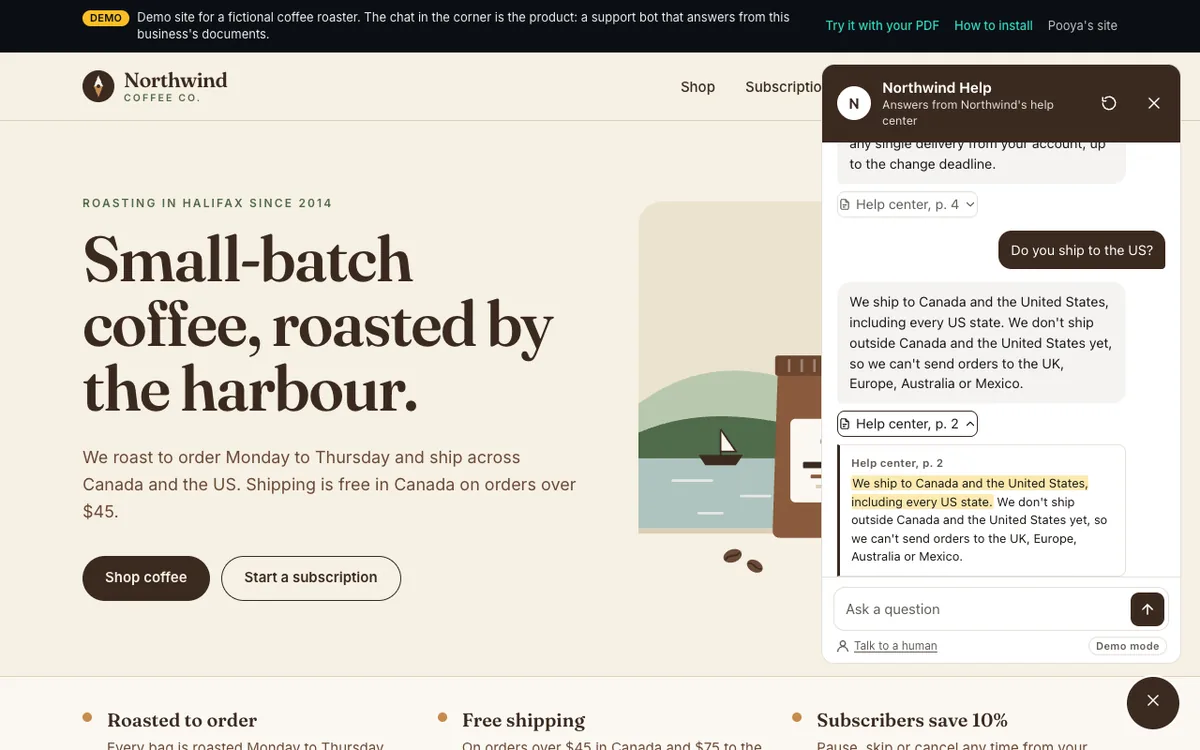
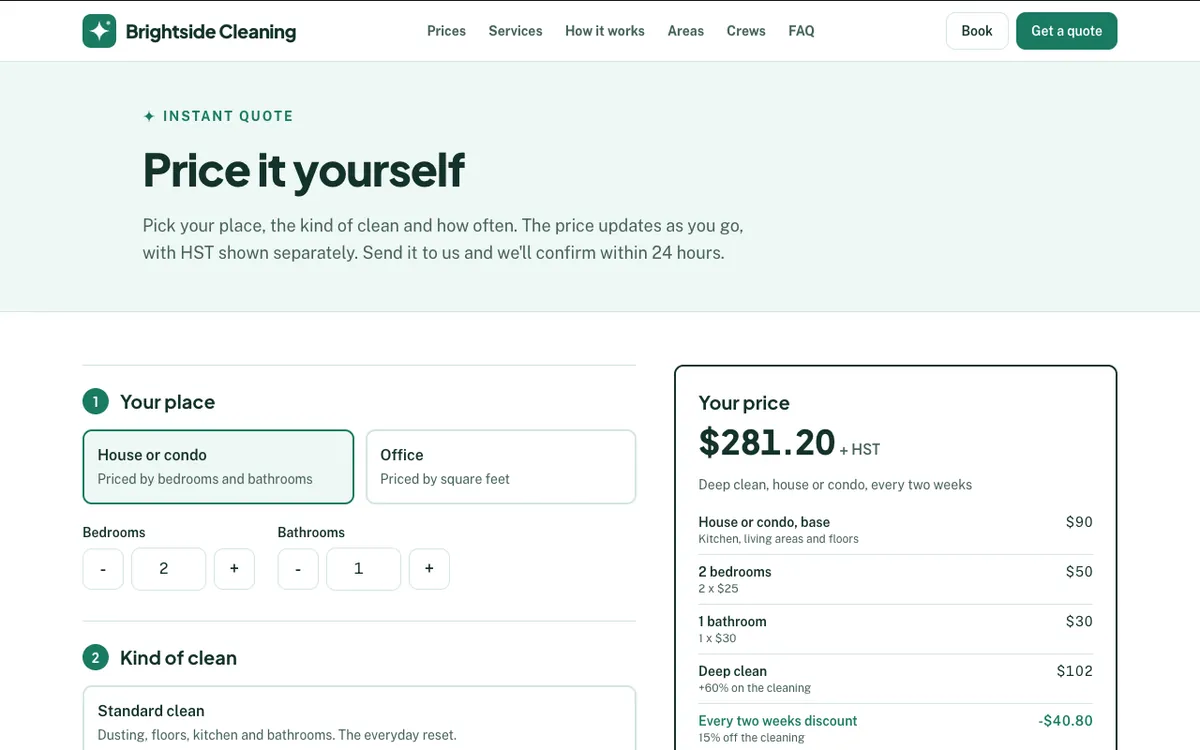
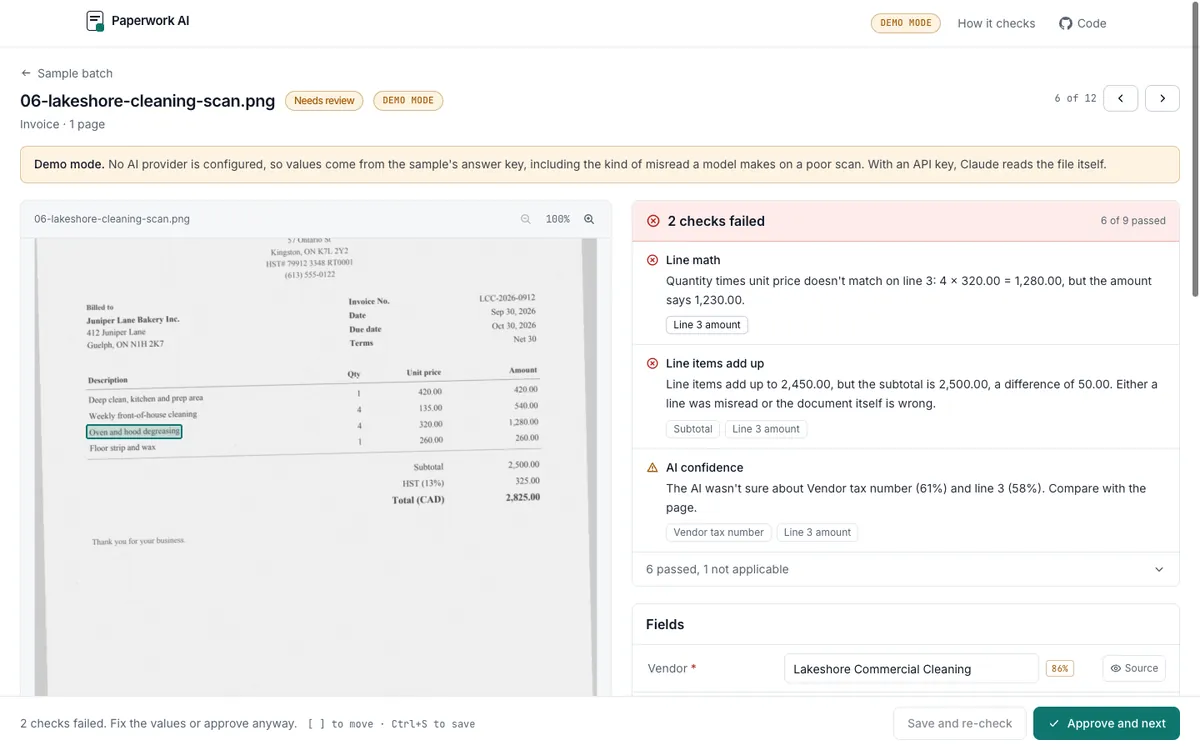
- Local businesses that answer the same questions all day, price jobs by hand, or type receipts into a spreadsheet. A website assistant answers from your own documents and books appointments into your calendar, Quote from a photo prices a job from a customer's pictures using your own price list, and Paperwork AI turns invoices and receipts into checked spreadsheets.
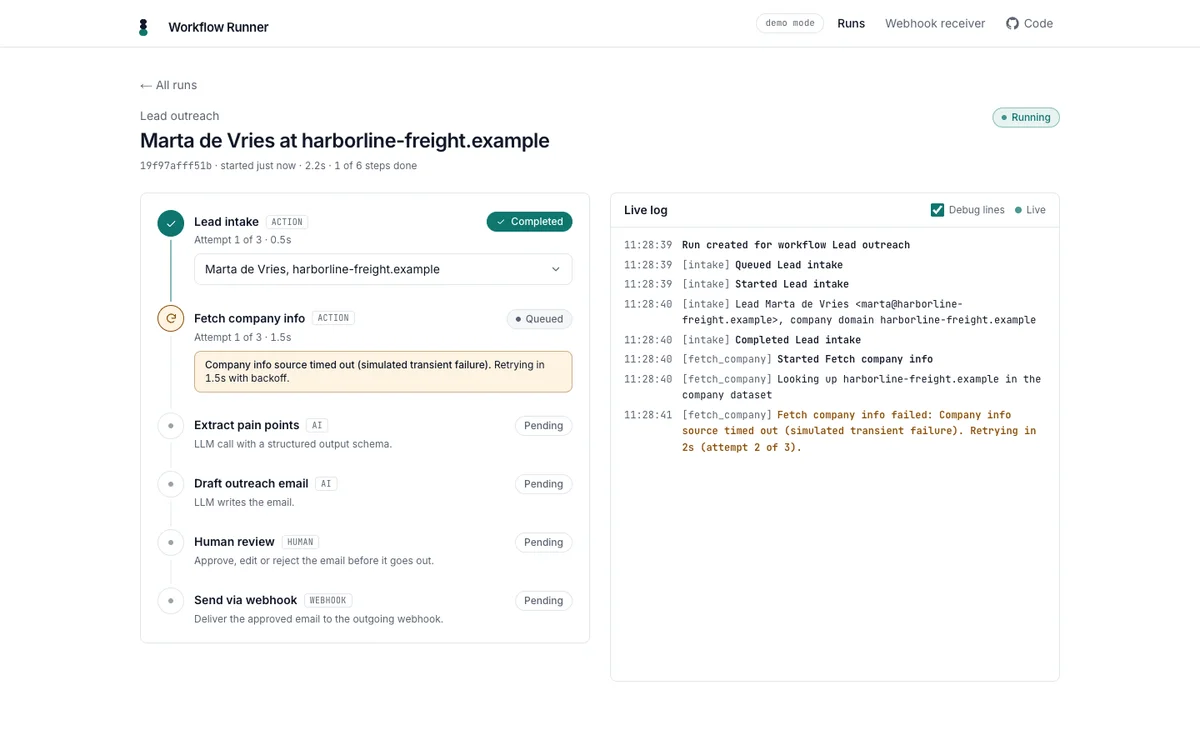
- Teams with a working product who want an AI feature users can trust, not a chat box bolted onto the side: search in plain English, questions answered from your documents, messy text turned into structured data, or multi-step workflows with a person approving the result.
What's included
- A simple AI endpoint or prompt feature, in FastAPI or Node. From $200, about 3 days.
- A support bot on your docs, or data extraction with a UI. From $650, about 7 days.
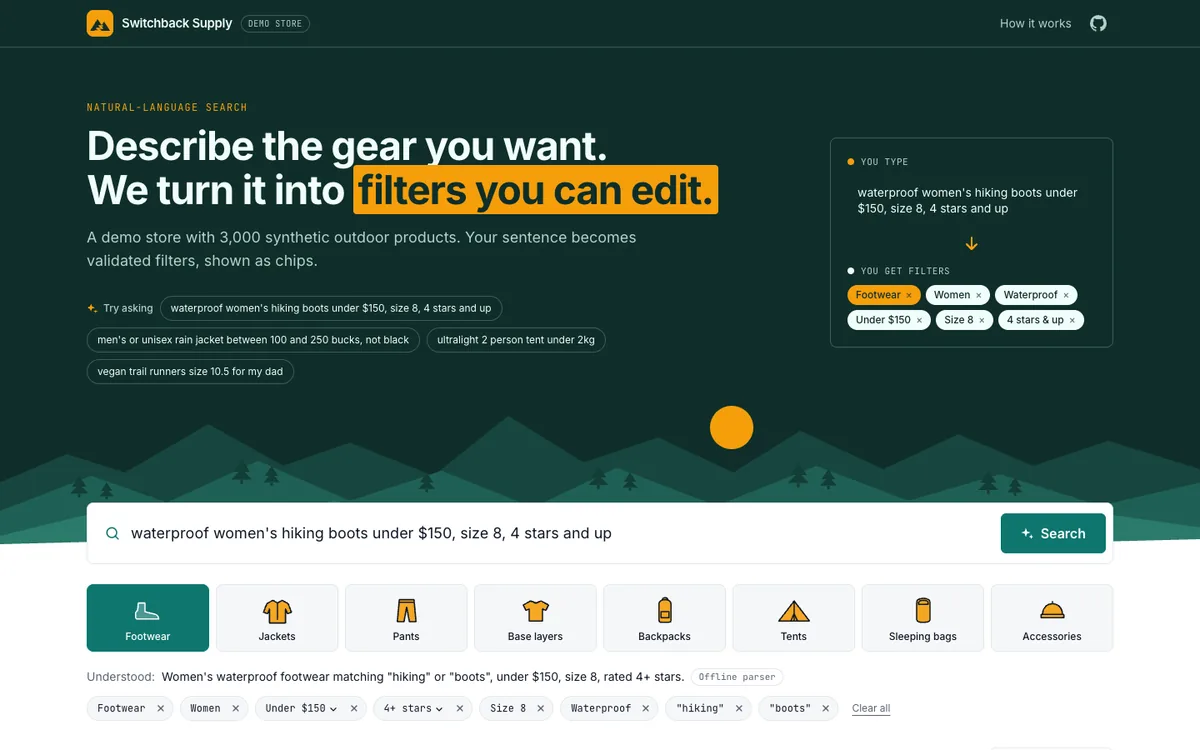
- Natural-language search or a workflow automation, with an evaluation suite. From $1,500, about 14 days.
I work with both OpenAI and Claude, and I usually put the provider behind a small interface so you can switch later.
How I keep it reliable
Model output is validated against a schema before your app uses it. Every feature ships with a small set of test cases that we run whenever the prompt or model changes, so you can see when something gets better or worse. When the model fails or is unavailable, the feature falls back to something sensible instead of breaking the page.
Background
I've built an LLM feature in production that turns plain-English requests into structured search filters, with validation and an evaluation suite. The demos linked below show the same patterns in public code.